
Buy Twilio Accounts
Original price was: $300.00.$250.00Current price is: $250.00.
Are you looking for Buy Twilio Accounts for your business? Then, you have hit the right place. We can provide you fully verified accounts at a very reasonable price. If you are interested, just knock us contact ⏩

Buy Twilio Accounts
Are you looking to boost your communication with customers or streamline your business messaging? Twilio accounts are the key to making that happen. With a Twilio account, you can easily send texts, make calls, and integrate powerful communication tools right into your apps. But setting up and managing your Twilio account the right way can be confusing. You’ll discover simple steps and insider tips to get the most out of your Twilio account. Keep reading to unlock the full potential of your communication strategy and take your business to the next level.
Setting Up Twilio Accounts
Setting up a Twilio account is the first step to using its powerful communication tools. This process is straightforward and takes just a few minutes. Twilio allows businesses and developers to send messages, make calls, and build communication apps easily.
Creating Your Twilio Account
Start by visiting the Twilio website. Click the sign-up button and fill in basic information like your name, email, and a password. Use a valid email address for verification.
After submitting the form, check your email for a confirmation link. Click it to activate your account. This step is important to secure your Twilio account.
Choosing A Phone Number
Once your account is active, Twilio will ask you to select a phone number. This number will be used for sending SMS, making calls, or both.
- Pick a number based on your country or area code.
- Consider the type of number: local, mobile, or toll-free.
- Verify the cost of the number, as prices vary.
Setting Up Your Twilio Console
The Twilio Console is your control panel. Here, you manage phone numbers, view usage, and access APIs.
- Log in to your Twilio account.
- Explore the dashboard and menu options.
- Check your account SID and Auth Token; you need these for API access.
Keep your Auth Token private.
It grants access to your account and billing.

Adding Payment Details
To use Twilio beyond the free trial, enter payment information.
| Payment Method | Notes |
| Credit/Debit Card | Most common and accepted worldwide. |
| PayPal | Available in selected countries. |
Adding payment details lets you buy phone numbers and pay for usage without interruptions.
Verifying Your Phone Number
To secure your account, Twilio asks for phone number verification. This process helps prevent fraud.
- Enter your personal phone number in the console.
- Receive a verification code via SMS or call.
- Submit the code to complete verification.
Types Of Twilio Accounts
Twilio offers different account types to meet various user needs. Each account type provides specific features and limits. Choosing the right account helps you build and manage your communication apps smoothly. Let’s explore the main types of Twilio accounts to understand their uses and benefits.
Trial Account
The Trial Account lets new users test Twilio’s services for free. It includes a small credit to try messaging, voice, and other APIs.
- Free credit provided at signup
- Limited to verified phone numbers for sending messages or calls
- Access to most Twilio features with some restrictions
- Ideal for learning and development
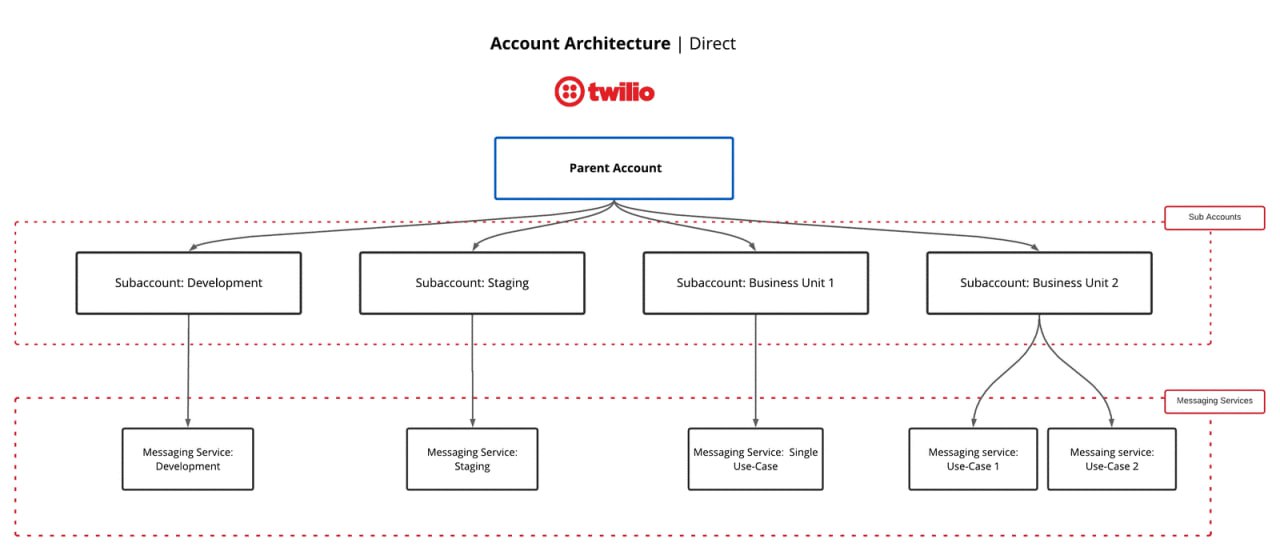
Subaccounts
Subaccounts help organize projects under one master account. They allow separate billing and management for different apps or clients.
- Separate API keys and phone numbers per subaccount
- Isolate usage and costs for each subaccount
- Useful for agencies or developers managing multiple clients
- Managed from the main Twilio console
Enterprise Account
The Enterprise Account suits large businesses with high-volume needs. It provides custom pricing and dedicated support.
- Personalized service and account management
- Advanced security and compliance options
- Priority access to new features
- Service-level agreements (SLAs) for uptime and support
| Account Type | Main Features | Best For |
| Trial Account | Free credit, limited sending, trial message added | Beginners and testing |
| Paid Account | Full access, no limits, scalable | Developers and production apps |
| Subaccounts | Separate projects, billing, API keys | Agencies, multi-client management |
| Enterprise Account | Custom pricing, support, security | Large businesses, high volume |
Creating A Twilio Account
Creating a Twilio account is the first step to using its powerful communication tools. It allows you to send messages, make calls, and build apps easily. The sign-up process is simple and quick. You need basic information like your email and phone number to get started. Once you create an account, you get access to the Twilio dashboard where you manage your projects.
Creating Your Twilio Account Step-by-step
Follow these steps to create your Twilio account:
- Go to the Twilio website at twilio.com.
- Click on the Sign Up button.
- Enter your email address and create a strong password.
- Provide your full name and phone number for verification.
- Accept the terms and conditions and privacy policy.
- Click Create Account.
- Verify your phone number by entering the code sent via SMS.
Choosing Your Twilio Account Type
Twilio offers two main account types. Choose the one that fits your needs:
| Account Type | Description | Best For |
| Trial Account | Free account with limited features and a small credit. | Testing and learning Twilio services. |
| Full Account | Paid account with full access to all features. | Building live applications and production use. |
Setting Up Your First Twilio Project
After creating your account, start your first project:
- Log in to the Twilio console.
- Click Create Project.
- Name your project clearly to identify it later.
- Select the use case (e.g., Messaging, Voice, Video).
- Click Start Project.
You will see your Account SID and Auth Token. Keep them safe. These are your keys to use Twilio’s API.
Account Verification Process
The Account Verification Process in Twilio is essential for security and trust. It helps confirm the identity of users and prevents misuse. This process keeps your account safe and ensures smooth access to Twilio services.
What Is Account Verification?
Account verification is the step where Twilio checks if you are a real user. It involves providing some personal information and confirming your contact details. This process protects your account from fraud and unauthorized use.
Steps In Twilio Account Verification
- Sign up: Start by creating a Twilio account with your email.
- Email confirmation: Click the link sent to your email to verify it.
- Phone number verification: Provide a phone number and enter the code sent via SMS or call.
- Identity verification: Submit personal details or documents if requested.
- Payment method verification: Add and verify a payment method to unlock full features.
Why Verification Matters
- Prevents fraud: Stops fake accounts and misuse.
- Improves security: Protects your data and resources.
- Access to features: Verified accounts get full Twilio services.
- Better support: Twilio helps verified users faster.
Free Trial Accounts
Twilio offers Free Trial Accounts for users to explore its communication services without any initial cost. These accounts help beginners test features like messaging, voice calls, and more. Users get a chance to understand the platform before making any payment.
What You Get With A Free Trial Account
A Twilio Free Trial Account provides essential tools to start building applications quickly. Here are the main benefits:
- Trial Credit: $15 of free credit to use on Twilio services.
- Phone Number: A free Twilio phone number to send and receive messages or calls.
- Access to APIs: Full access to Twilio’s API for SMS, voice, and other features.
- Support Resources: Access to documentation and developer tools.
Limitations Of Free Trial Accounts
Trial accounts have some restrictions to protect Twilio and its users.
- Message Tags: All messages include a “Sent from your Twilio trial account” note.
- Verified Numbers Only: You can only send messages or calls to verified phone numbers.
- Limited Credit: When the free $15 credit runs out, services stop until you upgrade.
- No Short Codes: Short codes and other premium features are unavailable during the trial.
How To Sign Up For A Free Trial Account
- Visit the Twilio website and click on the “Sign Up” button.
- Enter your email address and create a secure password.
- Verify your email to activate your account.
- Provide your phone number to verify your identity.
- Receive $15 free credit and a Twilio phone number to start testing.
Best Uses For Twilio Free Trial Accounts
The Free Trial Account suits several user needs:
- Testing SMS or voice call features in apps.
- Learning how to use Twilio APIs.
- Trying out automation like chatbots or notification systems.
- Building small projects or prototypes.
Upgrading To A Paid Account
Upgrading to a paid Twilio account opens up more features and fewer limits. Free accounts are great for testing, but paid accounts provide full access to Twilio’s services. This change allows businesses to send more messages, make more calls, and use advanced APIs. It also removes trial restrictions like message watermarks and limited credit.
Tips For Managing Your Paid Twilio Account
- Set spending limits to control costs.
- Monitor usage regularly in the Console.
- Use alerts for unexpected charges.
- Review and update payment methods.
- Keep API keys secure and rotate them often.
Billing And Usage
Billing settings help you monitor costs and manage payment methods. You can view invoices, set spending limits, and update credit card information.
| Feature | Description |
| Invoices | Download or review past bills and payment history. |
| Spending Limits | Set maximum monthly spend to avoid unexpected charges. |
| Payment Methods | Add or update credit card and bank details securely. |
Notification Preferences
Notifications keep you informed about account changes and service status. Customize which alerts you receive and how.
- Email alerts for security events and billing updates.
- SMS notifications for critical account warnings.
- Webhook setup to send real-time updates to your apps.
Api Credentials And Security
API credentials are the keys to your Twilio account. They allow your apps to connect and use Twilio’s services. Protecting these credentials is crucial. If someone else gets them, they can misuse your account. Good security keeps your data safe and your costs under control.
Api Credentials In Twilio
Twilio provides two main credentials:
- Account SID: A unique identifier for your account.
- Auth Token: A secret key used to authenticate API requests.
Use these to send messages, make calls, and manage your services via API.
Best Practices For Securing Api Credentials
Keep your credentials private. Follow these tips:
- Never share your Auth Token publicly or in code repositories.
- Store credentials in environment variables or secure vaults.
- Rotate your Auth Token regularly to reduce risk.
- Use Twilio’s API Keys for better control and limited permissions.
Using Twilio Api Keys For Enhanced Security
API Keys offer more security than the Account SID and Auth Token alone. They allow you to:
- Create keys with specific permissions.
- Revoke keys without affecting the whole account.
- Track usage per key for better monitoring.
Generate API Keys in the Twilio Console under the API Keys & Tokens section.
Securing Api Requests
Protect your API calls with these methods:
- Use HTTPS to encrypt data in transit.
- Validate requests using Twilio’s request validation feature.
- Limit IP addresses that can access your API.
Summary Of Twilio Api Credential Security
| Security Aspect | Best Practice |
| Credential Storage | Use environment variables or secret managers |
| Credential Sharing | Keep private, never commit to public repos |
| Token Rotation | Change Auth Token regularly |
| Use of API Keys | Create keys with limited permissions |
| Request Security | Use HTTPS and validate requests |
Billing And Payment Options
Managing your Twilio account involves understanding the billing and payment options. This knowledge helps you control costs and avoid service interruptions. Twilio offers flexible payment methods and clear billing cycles to suit different needs.
Billing Cycle And Invoice Details
Twilio bills customers monthly. Each billing cycle lasts about 30 days, depending on your account start date. You receive an invoice that lists all charges during the cycle.
- Invoice date: The date when the bill is generated.
- Due date: The payment deadline, usually 15 days after the invoice date.
- Billing summary: Shows charges for messaging, voice calls, phone numbers, and other services.
Invoices provide clear details so you can track your spending easily.
Payment Methods Supported
Twilio accepts several payment options to make transactions simple.
| Payment Method | Description | Availability |
| Credit and Debit Cards | Visa, MasterCard, American Express, Discover | Global |
| PayPal | Secure online payments linked to your account | Select countries |
| Wire Transfer | Bank transfers for large payments or enterprise accounts | By arrangement |
| Automatic Payments | Auto-pay setup to avoid manual payment each cycle | All customers |
Managing Payment Settings
Control your payment preferences inside your Twilio console.
- Log in to your Twilio account.
- Navigate to the Billing section.
- Select Payment Methods to add or update cards and accounts.
- Enable or disable auto-pay to automate payments.
- Review your billing history and download invoices as needed.
Regularly checking payment settings helps avoid disruptions and keeps your account active.
Using The Twilio Console
The Twilio Console is the main place to manage your Twilio account. It is a web dashboard that helps you control your settings, view usage, and create new projects. The Console makes working with Twilio simple and clear. You do not need to write code to use many features. Just click, type, and manage everything in one spot.
Dashboard Overview
The dashboard gives a clear view of your Twilio usage and settings. You find sections like:
- Project Info: Name and SID of your current project
- Balance: Your remaining Twilio credits
- Recent Logs: Summary of your API calls and messages
- Quick Actions: Buttons to send messages or buy numbers
This layout helps you check key details fast without searching.
Managing Phone Numbers
In the Console, click “Phone Numbers” on the left menu. Here, you can:
- Buy new numbers from many countries.
- View details of your existing numbers.
- Configure settings like call forwarding or SMS handling.
The Console shows pricing and number types clearly. You can filter numbers by country or capabilities.
Sending Messages And Making Calls
The Console lets you test sending SMS and making calls easily. Go to “Messaging“ or “Voice” sections. Then:
- Enter the phone number you want to contact.
- Write your message or set call options.
- Click to send or call directly.
This is useful for quick testing before writing code.
Viewing Logs And Usage
Track your Twilio activity in the “Logs“ section. It shows:
| Log Type | Description |
| Message Logs | Details about sent and received SMS |
| Call Logs | Information on placed and received calls |
| Error Logs | Reports on failed API requests |
Use filters to find specific events by date, phone number, or status.
Account Settings And Security
Manage your account and keep it secure in the “Settings“ area. You can:
- Update your profile and contact info.
- Change your password.
- Set up two-factor authentication for extra safety.
- Generate API keys to use with your projects.
These options help protect your account and keep control.
Integrating Twilio With Applications
Twilio is a powerful platform for adding communication features to apps. Integrating Twilio with applications lets developers send texts, make calls, and handle messages easily. This integration improves user interaction and automates many communication tasks. Simple steps and tools help connect Twilio accounts to apps of all types.
How To Connect Twilio To Your Application
Start by creating a Twilio account and getting API credentials. These include the Account SID and Auth Token. Use these keys to connect your app securely to Twilio’s services.
- Sign up at the Twilio website
- Navigate to the Console Dashboard
- Copy your Account SID and Auth Token
- Use these credentials in your app’s configuration
Many programming languages support Twilio libraries for easy setup. These libraries handle communication with Twilio’s API.
Using Webhooks To Receive Messages
Webhooks let your app receive messages and calls instantly. Twilio sends data to your app’s URL when an event happens
To set up a webhook, provide a public URL where your app can receive HTTP POST requests. Your server reads the data and responds with TwiML instructions.
Account Limits And Restrictions
Twilio accounts have certain limits and restrictions to keep the platform secure and running smoothly. These rules help manage resources and prevent misuse. Understanding these limits is important to avoid disruptions in your service.
Account Type Limits
Twilio offers different account types, each with specific limits:
- Trial Accounts: Limited to testing features with a small balance.
- Full Accounts: No balance limit but subject to usage policies.
Trial accounts cannot send messages to unverified numbers or make calls to all destinations.
Monitoring Usage And Analytics
Monitoring usage and analytics in Twilio accounts helps track how services perform. It shows details about messages sent, calls made, and costs. This information lets users control spending and improve communication strategies. Understanding usage patterns is key to managing Twilio resources well.

Usage Dashboards For Real-time Insights
Twilio provides usage dashboards that update data in real time. These dashboards display:
- Number of API requests
- Messages sent and received
- Voice call minutes used
- Errors and warnings
The clear layout helps spot trends quickly. Users can see peak usage times and identify unusual activity fast.
Detailed Analytics Reports
Twilio’s analytics reports offer deep insights into communication patterns. Reports include:
- Message delivery status – Success, failure, or pending
- Call duration and quality metrics
- Geographic data showing where messages or calls occur
- Cost breakdown by service or time period
These details help users optimize their messaging and calling plans. They can reduce costs and improve user experience.
Setting Alerts And Usage Limits
Users can set alerts to monitor spending or usage limits. Alerts notify when:
- Usage nears a set threshold
- Monthly budget limits are close
- Errors increase above normal levels
This feature prevents unexpected charges and service interruptions. It supports better budget control and operational stability.
Using Twilio’s Api For Custom Monitoring
Twilio’s API allows building custom tools to track usage and analytics. Developers can:
- Fetch real-time data programmatically
- Integrate usage data into existing dashboards
- Automate alerts based on custom rules
This flexibility helps businesses tailor monitoring to their specific needs. It ensures data is always accessible in preferred formats.
Managing Multiple Accounts
Managing multiple Twilio accounts can be challenging without the right approach. Many businesses use several accounts to separate projects or clients. Keeping track of each account’s settings, usage, and billing is crucial. Organizing these accounts properly saves time and avoids errors. This section explains how to manage multiple Twilio accounts efficiently.
Using The Twilio Console For Account Switching
The Twilio Console allows easy switching between accounts. This feature helps users access different accounts without logging out.
- Click your profile icon at the top right corner.
- Select “Switch Account” from the dropdown menu.
- Choose the account you want to access.
This method reduces login hassle and speeds up workflow when handling many accounts.
Organizing Accounts With Naming Conventions
Clear naming makes managing accounts simple. Use short, descriptive names for each Twilio account.
Tracking Usage And Billing Across Accounts
Monitoring usage and costs is important for multiple accounts. Twilio offers detailed reports and billing information.
- Log in to each account’s Console.
- Go to the Billing section to check costs.
- Use the Usage dashboard for message and call data.
Keeping records in a spreadsheet can also help compare and control expenses.
Managing Api Keys And Security
Each Twilio account has its own API keys. Secure handling of these keys is essential.
- Store API keys in a secure password manager.
- Generate separate keys for different projects.
- Regularly rotate keys to improve security.
Never share API keys publicly or with unauthorized users.
Troubleshooting Account Issues
Troubleshooting account issues in Twilio can help keep your communication services running smoothly. Problems like login errors, billing issues, or API key problems can stop your work. Knowing simple steps to fix these issues saves time and reduces stress. This section explains common problems and how to solve them clearly and quickly.
Login And Access Problems
Sometimes, you may have trouble logging into your Twilio account. Common causes include incorrect passwords, expired sessions, or browser issues. Try these steps:
- Reset your password using the “Forgot Password” link on the login page.
- Clear your browser cache and cookies.
- Use a different browser or device.
- Check if your account is locked due to multiple failed attempts.
- Ensure two-factor authentication (2FA) codes are correct.
Contact Twilio support if problems continue after these checks.
Billing And Payment Issues
Billing problems can stop your services. Common issues include failed payments or account suspension due to unpaid bills. Follow these tips:
- Verify your payment method details are up to date.
- Check your account balance and recent transactions.
- Review your billing history for any errors.
- Update your credit card or payment method if expired.
- Contact your bank if a payment is declined.
Keep track of billing notifications sent by Twilio via email.
Api Key And Authentication Errors
API keys control access to your Twilio services. Errors here can stop apps from working. Try these fixes:
- Make sure your API keys are correct and not expired.
- Check the permissions assigned to your keys.
- Regenerate API keys if you suspect they were compromised.
- Use environment variables to store keys securely in your app.
- Verify your request headers include the right authentication tokens.
Test your API calls using the Twilio Console or Postman tool.
Account Suspension And Restrictions
Accounts may be suspended due to policy violations or suspicious activity. To resolve this:
- Review Twilio’s acceptable use policy.
- Check your email for suspension notices and instructions.
- Submit an appeal or support ticket explaining your case.
- Ensure your account complies with all Twilio rules.
Early action helps restore access faster.
Security Best Practices
Protecting your Twilio account is vital to keep your data and communications safe. Strong security practices reduce risks of unauthorized access and fraud. Follow these simple steps to secure your Twilio account effectively.
Enable Two-factor Authentication (2fa)
Two-Factor Authentication adds an extra layer of security. It requires a code from your phone besides your password. This step makes hacking much harder.
- Go to your Twilio console settings.
- Turn on 2FA and choose your preferred method (SMS or authenticator app).
- Use an authenticator app for stronger security than SMS.
Use Strong And Unique Passwords
Create passwords that are long and hard to guess. Avoid common words or simple patterns. Use a mix of letters, numbers, and symbols.
- Make your password at least 12 characters.
- Never reuse passwords from other accounts.
- Use a password manager to generate and store passwords safely.
Limit Api Key Permissions
Control what your API keys can do. Only give the permissions that are necessary for each key.
| Permission Type | Description | Use Case |
| Read Only | Access to view data but not change it. | Monitoring usage and logs. |
| Send Messages | Allows sending SMS or calls. | Applications that send notifications. |
| Manage Resources | Full control including creating and deleting. | Admin tasks and setup. |
Regularly Review Account Activity
Check your Twilio logs often. Look for unusual or unknown activity.
- Log in to your Twilio console.
- Open the Usage or Logs section.
- Scan for unexpected API calls or messages.
- Immediately change passwords or revoke keys if suspicious activity appears.
Secure Your Webhooks
Protect the connection between Twilio and your servers. Verify all incoming requests to confirm they come from Twilio.
- Use Twilio’s request validation feature.
- Check the signature of incoming webhook requests.
- Reject requests that fail validation.
Deleting Or Closing Accounts
Managing your Twilio account is simple, but sometimes you need to delete or close it. This could be because you no longer need the service or want to remove your data. Understanding how to properly delete or close your Twilio account helps avoid billing issues and keeps your information safe.
Deleting Vs Closing A Twilio Account
Deleting and closing a Twilio account are different actions. Closing an account means stopping all services and billing, but your data stays for a while. Deleting an account means removing all your data permanently. Twilio usually allows closing first, then deletion later.
Steps To Close Your Twilio Account
- Log in to your Twilio Console.
- Go to the Account Settings page.
- Scroll down to the Close Account section.
- Click Close Account and confirm your choice.
After closing, you will stop being billed. Your services will stop working, but your account data stays for a limited time.
How To Permanently Delete Your Twilio Data
Twilio does not offer a direct delete button in the Console. You must contact Twilio support to request data deletion. This step removes your account and all personal data from Twilio’s systems.
- Prepare your account details.
- Send a request via the Twilio support portal or email.
- Wait for confirmation from Twilio.
Conclusion
Twilio accounts help you manage communication easily. You can send texts, make calls, and connect apps. Setting up an account is simple and quick. Many businesses use Twilio for better customer contact. It saves time and keeps things organized. Try creating your own account to see how it works. Communication made simple, clear, and effective. That’s the power of Twilio accounts.
3 reviews for Buy Twilio Accounts
Add a review

Original price was: $300.00.$250.00Current price is: $250.00.
Related Products





Greg White –
Quick delivery, ordered a Twilio account and got instant access. highly recommended
James Robles –
Very good service.
Linda Valentine –
good service